From the volcanic Tibesti to the floodplains of Zakouma, the eight territories that make up travellers' Chad.
The last great massif before the Nile
A 60,000 km² sandstone labyrinth where arches, spires and canyons shelter permanent water holes, relict crocodiles and seven thousand years of rock painting.
Eighteen lakes in the driest desert on earth
A string of blue, green and red lakes set among the dunes, fed by a fossil aquifer — the first Chadian site inscribed as World Heritage, in 2012.
The roof of the Sahara
A volcanic range topping out at 3,415 m on Emi Koussi, with calderas, sulphurous hot springs and stone villages clinging to the gorges.
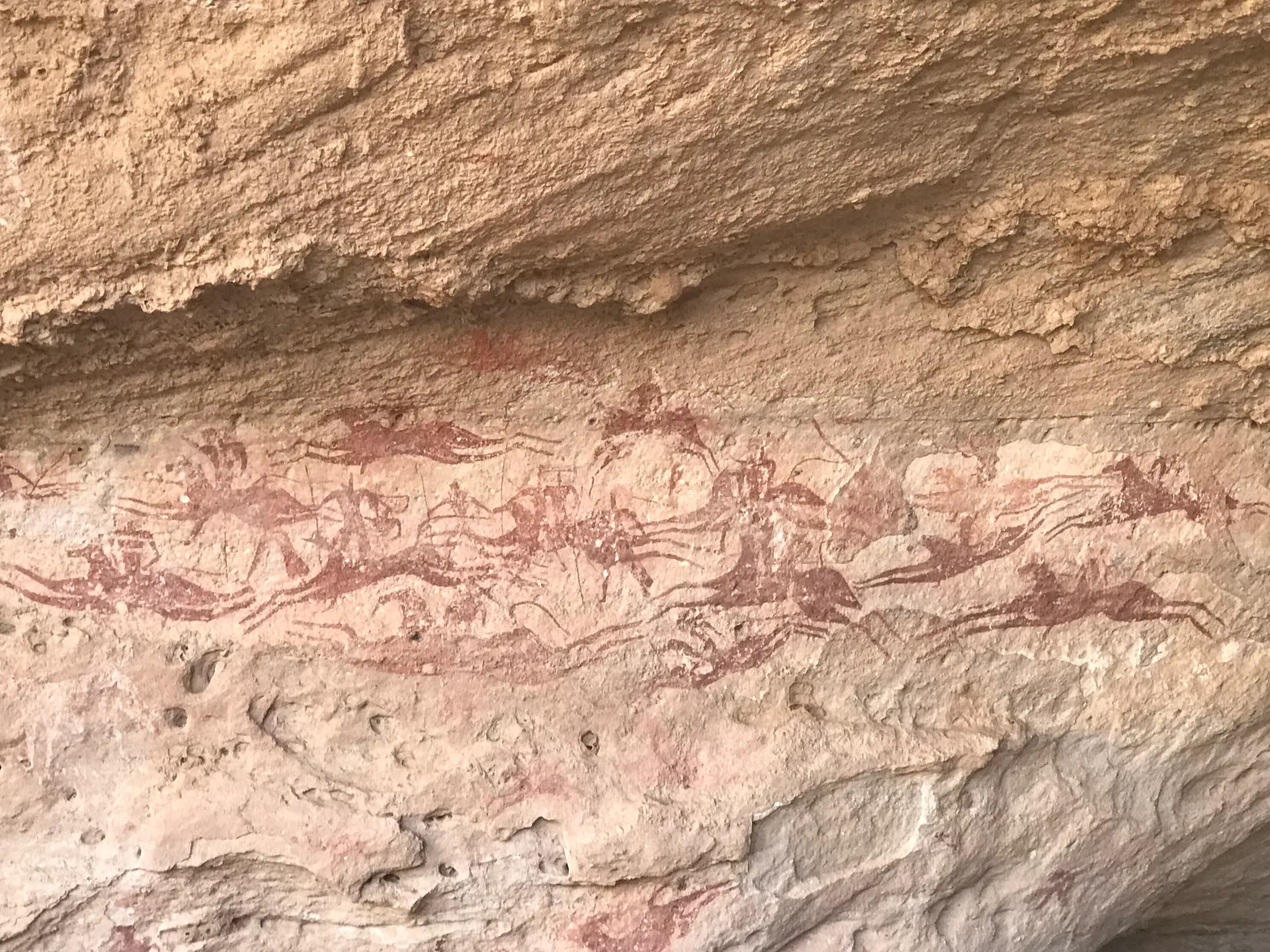
Seven thousand years of paintings and engravings
Thousands of frescoes across the walls of the Ennedi: cattle herds, giraffes, hunters, horsemen and finally camel caravans — the visual memory of a drying Sahara.
Where the scimitar-horned oryx came back
78,000 km² of Sahelian steppe north of Arada, stage for the reintroduction of the scimitar-horned oryx, a species declared extinct in the wild — one of the largest wildlife restoration programmes anywhere.
An inland sea and its thousands of islands
A labyrinth of water, reeds and dune-islands that gives the country its name, home to Kouri and Buduma fishers, amphibious cattle and vast birdlife.
The parade where it is the men who make themselves beautiful
At the end of each rainy season the Wodaabe gather: young men paint and adorn themselves and dance for hours, judged by women who choose freely.
One of Africa's great conservation successes
3,000 km² of floodplain savannah in the south-east, where an elephant population rescued from poaching lives alongside Kordofan giraffe, lion, buffalo and large concentrations of waterbirds.