

DesertDemanding
The Grand Loop: Ennedi and the Lakes of Ounianga
Fifteen days on the track linking Chad's two World Heritage sites, out by the northern route and back through the Ouaddaï.
- Duration
- 15 days
- Group size
- 4–12
Sahara
Seven thousand years of paintings and engravings
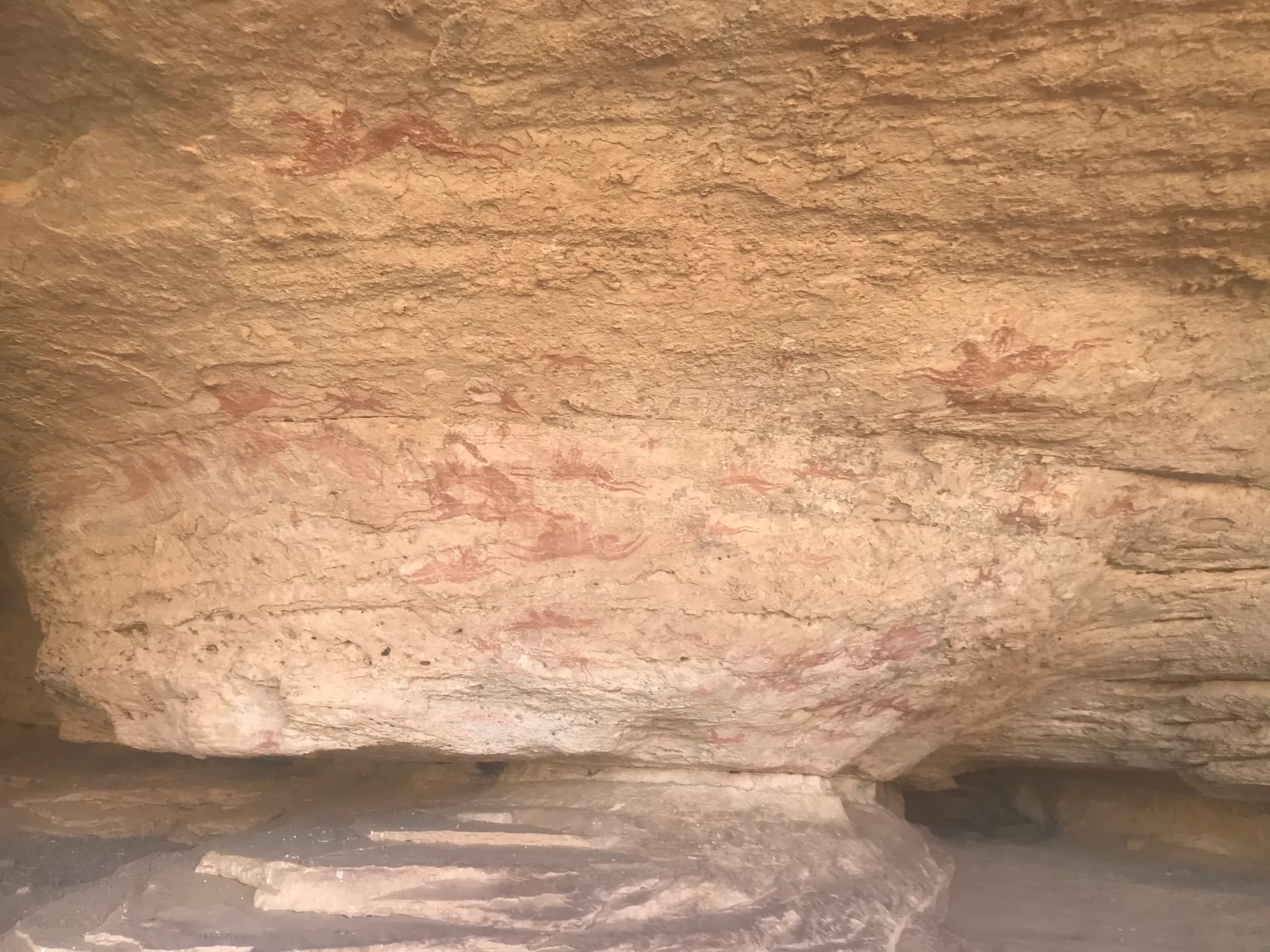
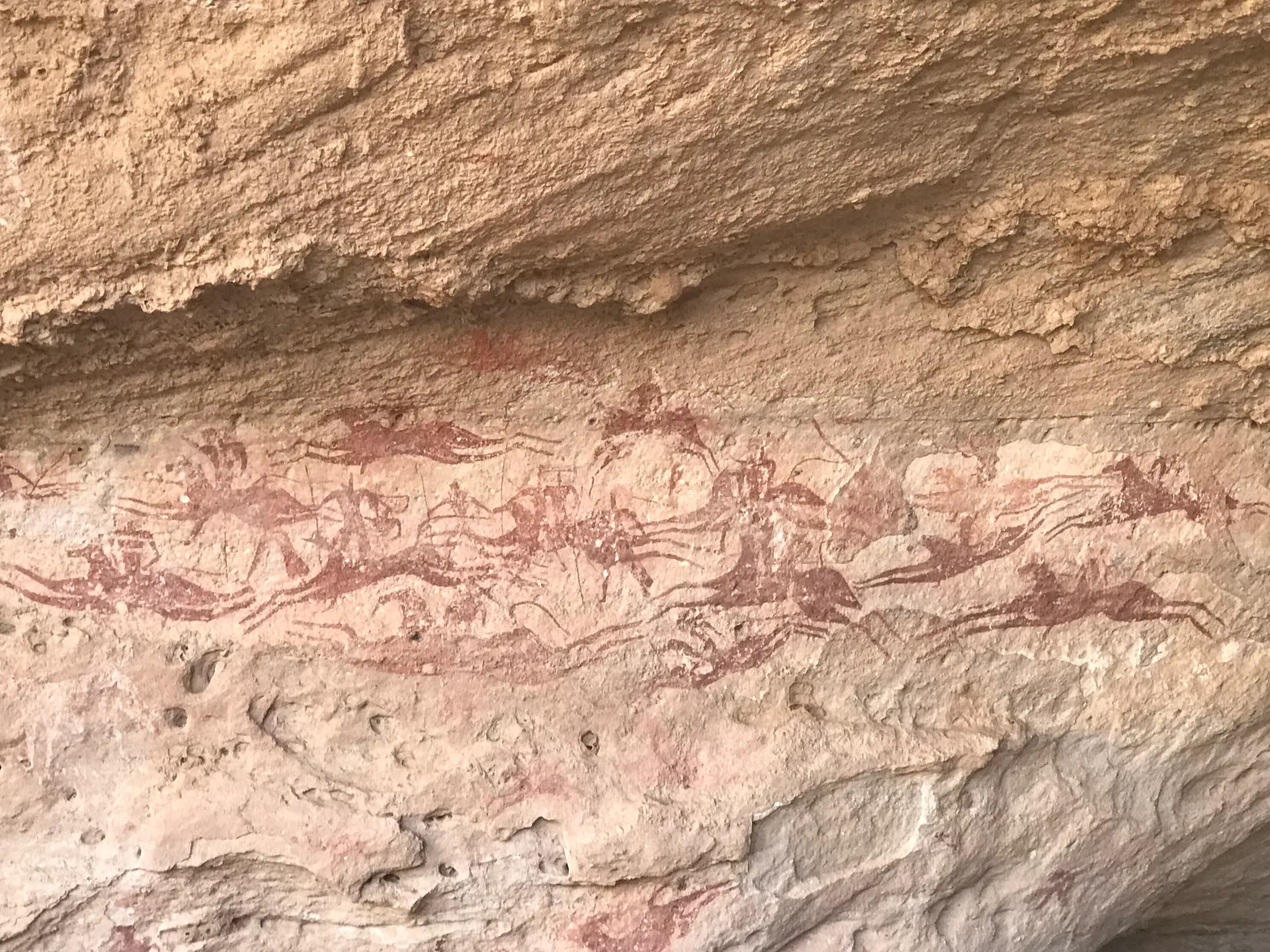
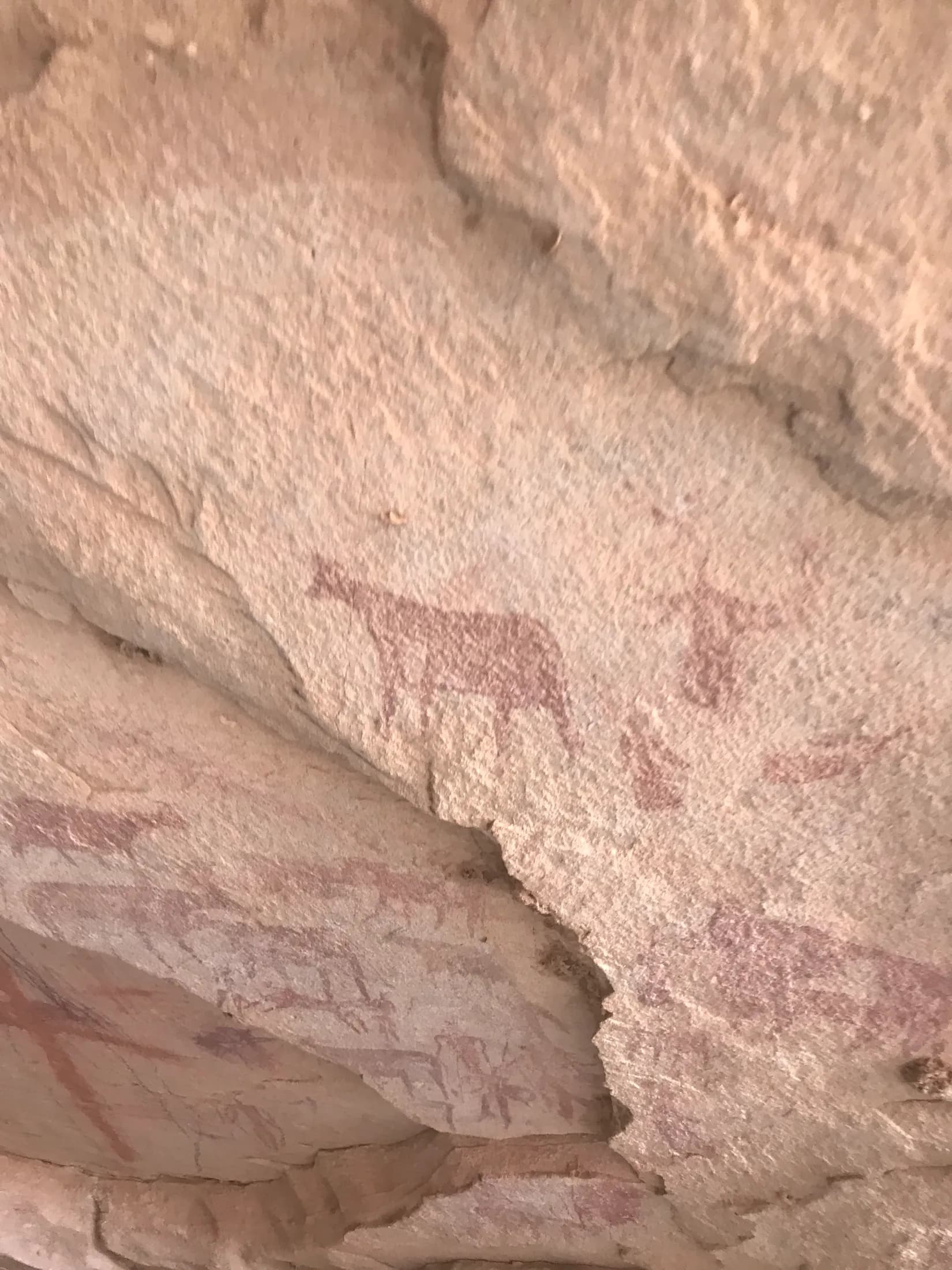
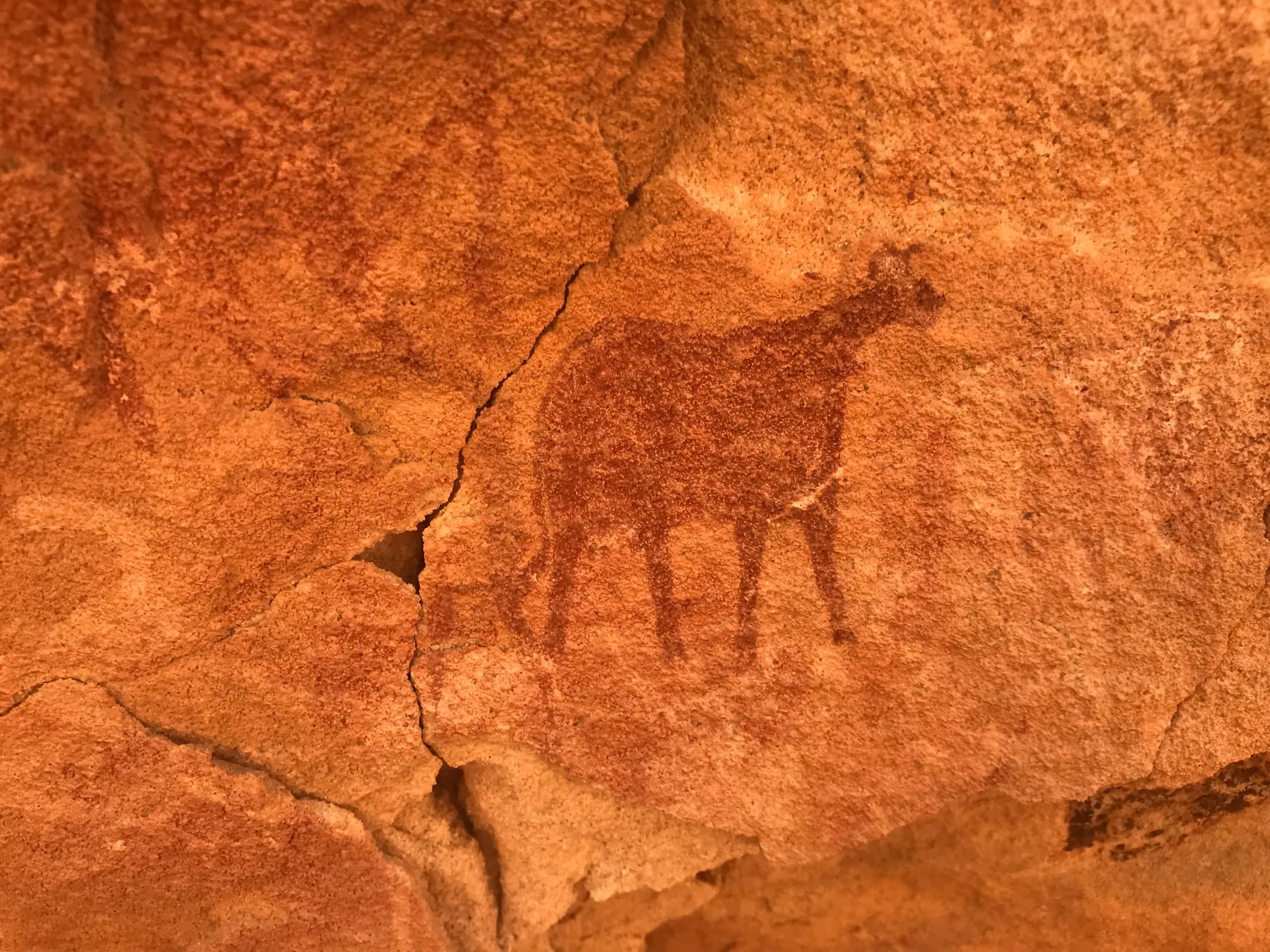
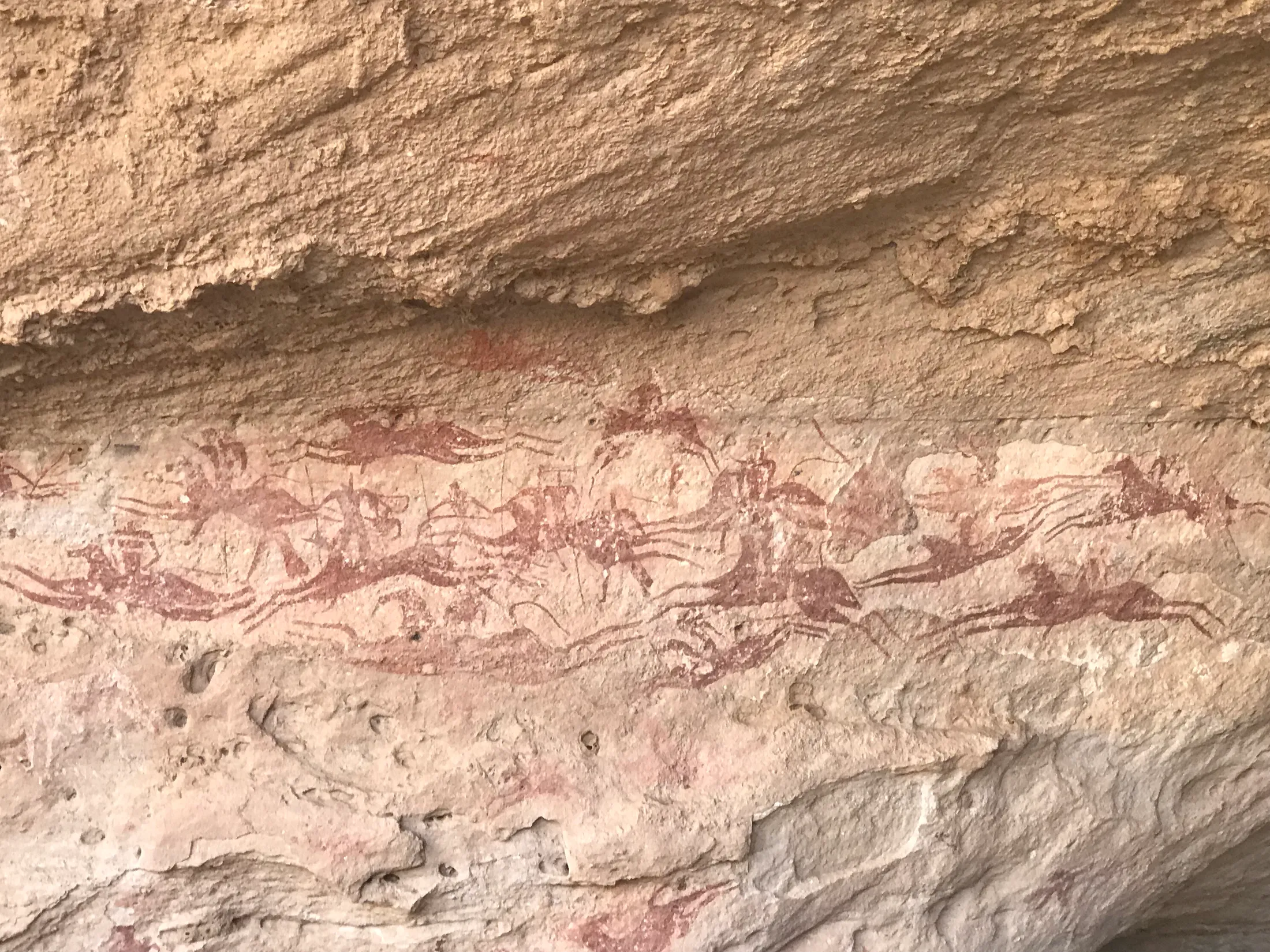
Saharan rock art is not decoration: it is an archive. Over nearly seven millennia the inhabitants of the massif painted and engraved what they saw. Following the animals depicted — first elephant and giraffe, then great cattle herds, finally horse and camel — you read the drying of the Sahara and the transformation of the societies that lived in it.
Prehistorians distinguish four great stylistic periods in Saharan rock art, and the Ennedi has them all.
Bubaline period (roughly 7000–5000 BCE). Deep engravings, often life-size, depict the large wild fauna of the humid Sahara: the ancient buffalo, elephant, rhinoceros, hippopotamus, giraffe. These are hunters carving, in a watered savannah landscape.
Bovidian period (roughly 5000–2000 BCE). The golden age of rock art. Polychrome paintings cover the shelters: immense herds of piebald cattle, scenes of milking, camp life, dance. A pastoral society has settled in. Human figures are slender, elongated, often adorned.
Caballine period (roughly 1500–500 BCE). The horse appears, harnessed to light chariots drawn in 'flying gallop'. This is the age of the Garamantes and the first trans-Saharan routes. The climate has already dried markedly.
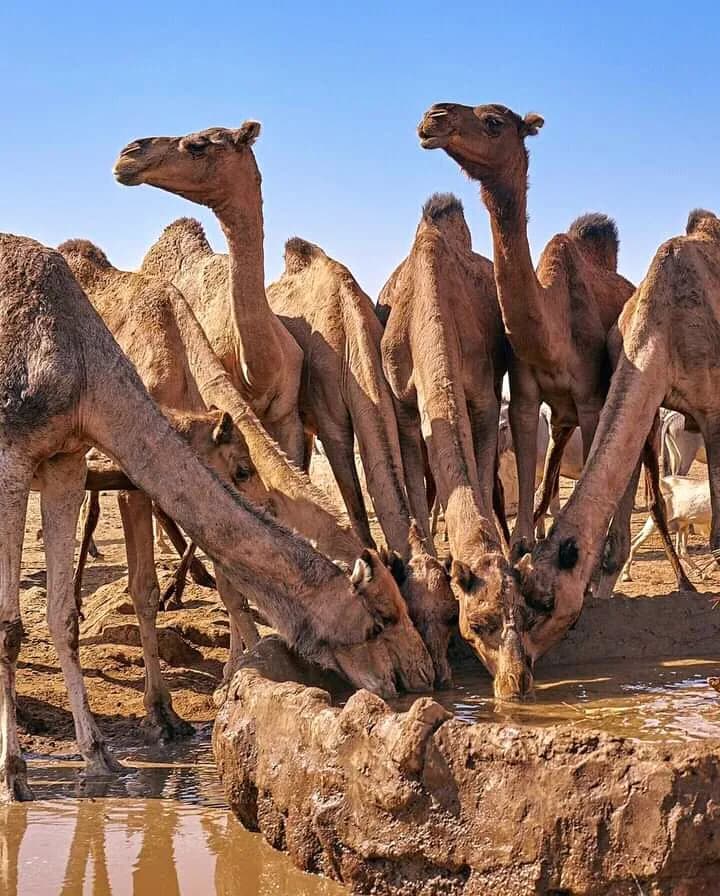
Cameline period (from roughly 500 BCE). The dromedary replaces everything else. Scenes become schematic, caravans lengthen. The Sahara has become what it is today, and rock art gently fades out.
At Terkei, at Niola Doa, in the shelters of the western Ennedi, these layers sometimes overlap on a single wall — seven thousand years of human history across three metres of sandstone.
Sites & heritage
Galerie
Our journeys
Fifteen days on the track linking Chad's two World Heritage sites, out by the northern route and back through the Ouaddaï.
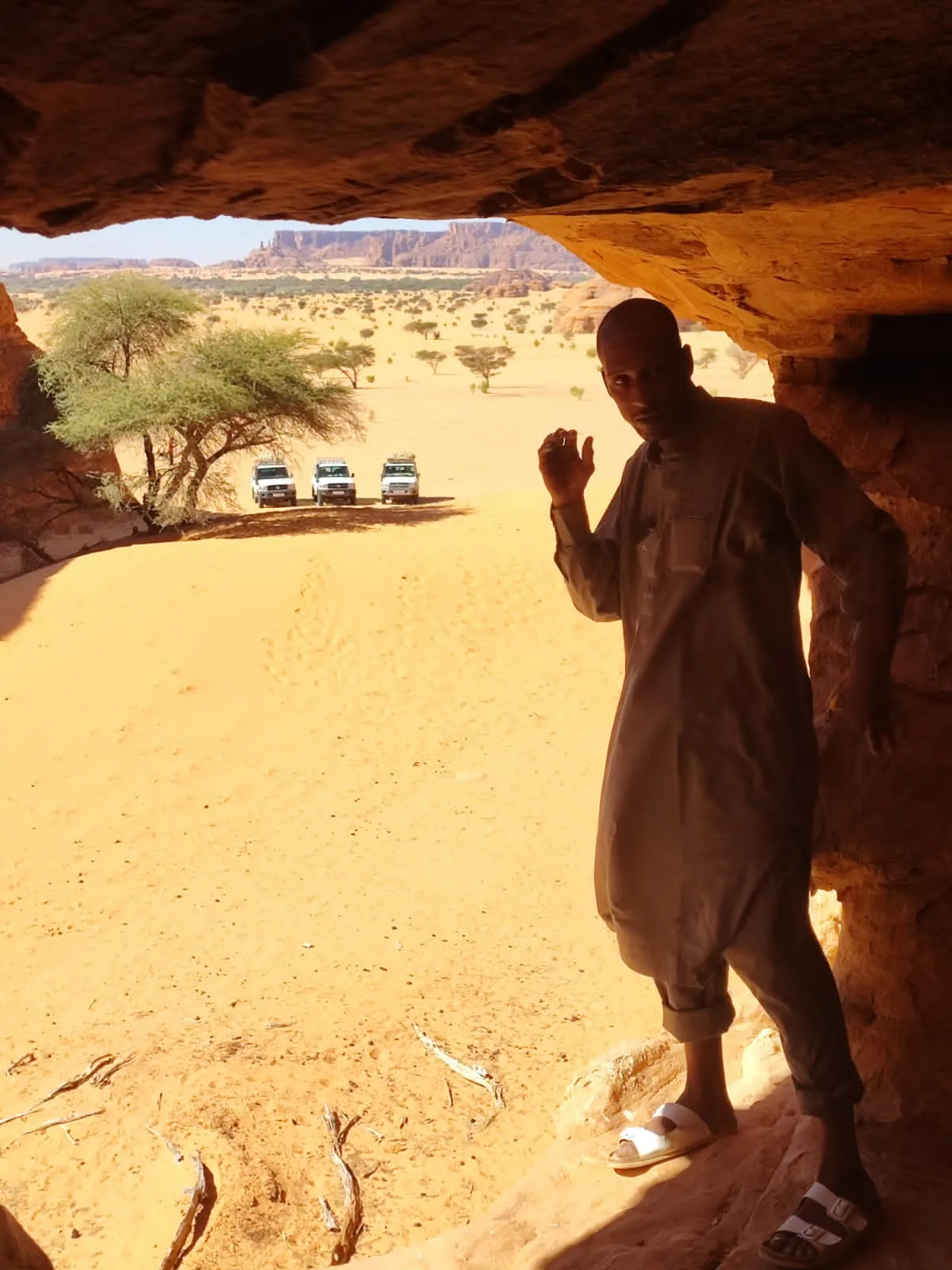
Eight days in the heart of the massif, flying in to Fada so that all the time goes to the ground.
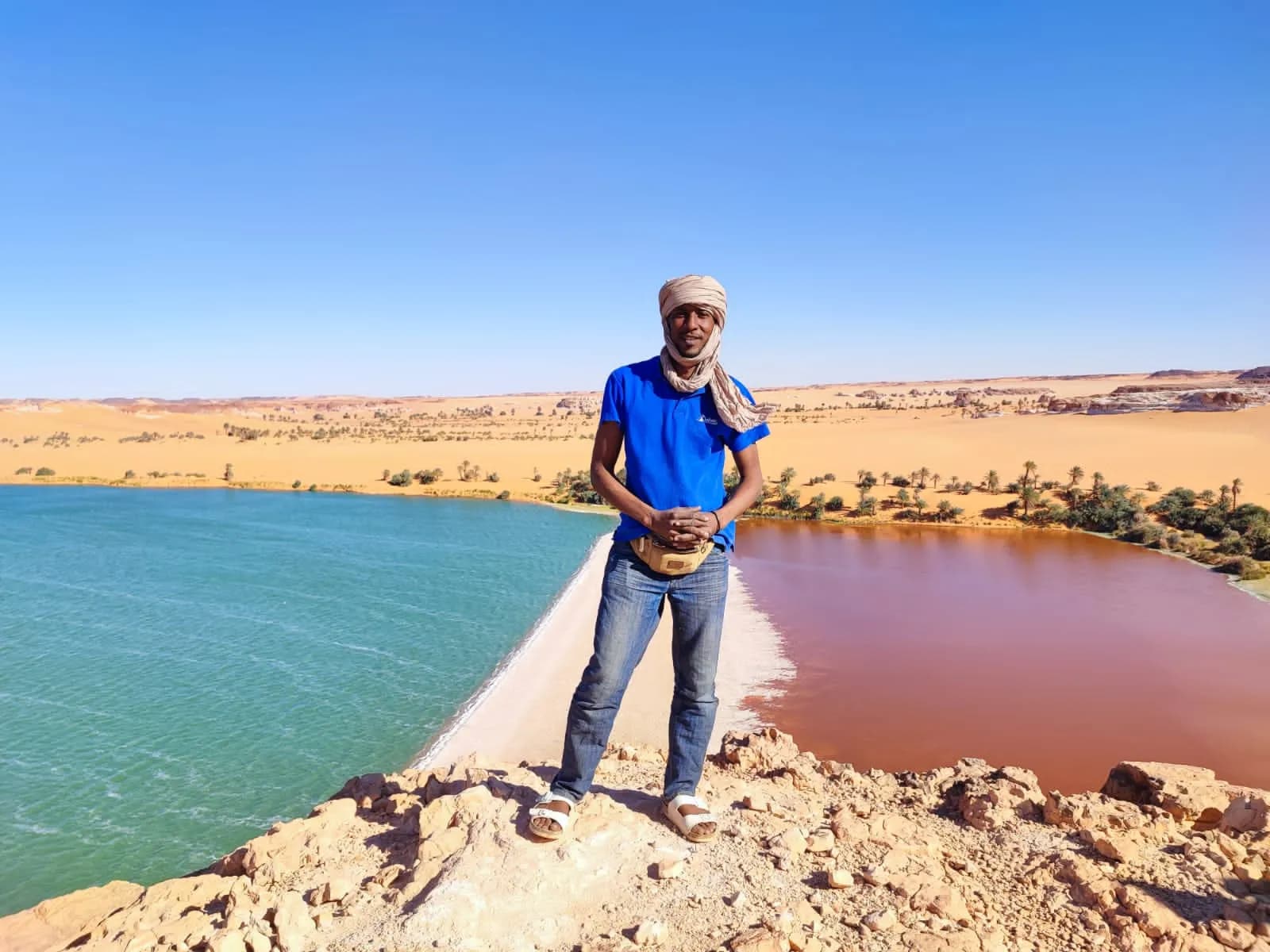
Eighteen days crossing the country north to south: the desert, then the savannah and its elephants.