
Une agence tchadienne
NBC Discovery est basée à N'Djamena. Nos guides, nos chauffeurs et nos cuisiniers sont tchadiens, salariés et formés par nous. La valeur du voyage reste dans le pays.
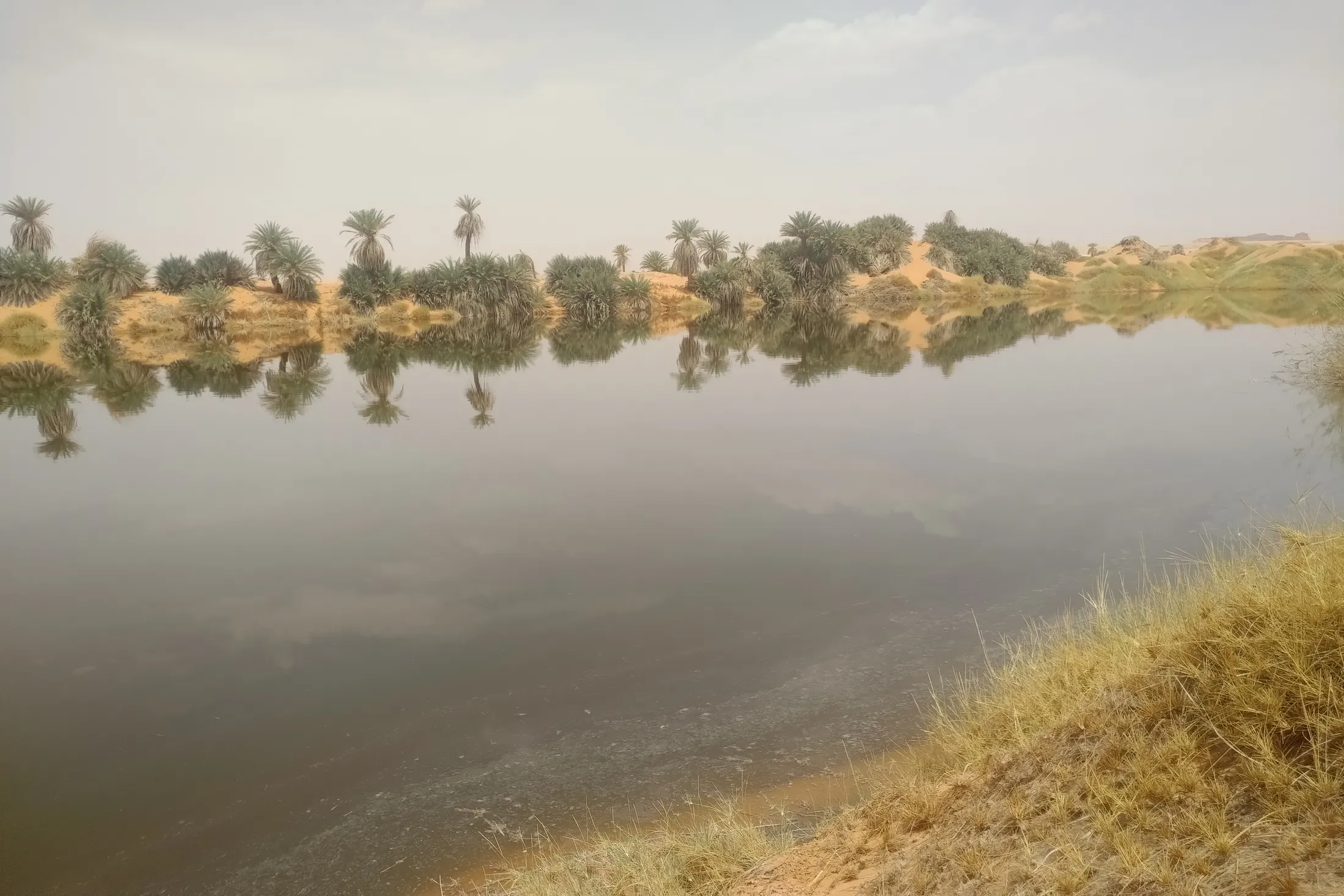
NBC Discovery is a Chadian agency, based in N'Djamena, showing travellers its own country.
Le Tchad est l'un des pays les moins visités du monde. Ce n'est pas faute de paysages : c'est faute de gens pour y emmener les voyageurs. NBC Discovery a été créée pour combler ce vide, depuis N'Djamena, par des Tchadiens qui connaissent leurs pistes.
Notre logo dit ce que nous faisons : une arche de l'Ennedi, le ciel du Sahara aperçu à travers, un dromadaire, une gazelle — et le ruban bleu, jaune et rouge du drapeau tchadien. Nous ne vendons pas une destination exotique, nous ouvrons un pays.
What we stand for
NBC Discovery est basée à N'Djamena. Nos guides, nos chauffeurs et nos cuisiniers sont tchadiens, salariés et formés par nous. La valeur du voyage reste dans le pays.
Nous suivons en permanence la situation sur nos itinéraires. Un circuit peut être modifié ou reporté ; il ne partira jamais si les conditions ne sont pas réunies.
Chaque itinéraire de ce site a été repéré et parcouru par notre équipe. Nous n'achetons pas de programmes tout faits et nous ne sous-traitons pas la conduite.
Pas de flash sur les peintures, pas de photo sans autorisation, pas de baignade dans les points d'eau des troupeaux. Ces règles ne sont pas négociables.
Frequently asked questions
Sécurité, formalités, saison, confort : les réponses que nous donnons au téléphone, écrites une bonne fois.
The honest answer is: it depends entirely on the region and the moment. The areas we travel — the Ennedi, Ounianga, Zakouma, Lake Chad around Bol — are calm and see travellers every season. Other parts of the country, notably some border areas, are not, and we do not go there.
We monitor the situation on our routes continuously, with contacts on the ground. An itinerary can be changed mid-trip, or a departure cancelled, if conditions deteriorate. That is a rule, not boilerplate: safety comes before the programme. Also consult the travel advice published by your own foreign ministry.
You need three things: a passport valid for at least six months beyond your return date, a Chadian visa, and a yellow fever vaccination certificate — the last is checked on arrival.
The visa is obtained from the Chadian embassy or consulate in your country of residence. We provide the letter of invitation and detailed programme required for the application. Allow [to be confirmed] weeks and plan ahead: this is what most often delays a departure.
A travel permit is also required for the Ennedi, the Tibesti and the desert areas. We handle that.
There is not one season but three, depending on what you want to see.
For the desert — Ennedi, Ounianga, Tibesti — the window runs November to March: days around 25–30 °C, cool nights, dry tracks. For Zakouma, the park opens from December to mid-April, and March is ideal: the water has withdrawn and wildlife concentrates on the last pans. For the Wodaabe Gerewol it is September–October, just after the rains — and the exact date depends on the pastures.
If you have only one trip, December–January lets you combine desert and Zakouma in a single crossing.
Not in the athletic sense, but you need to be in good health and to have stamina. What tires people on our trips is not the walking — it stays short, one to three hours — but the long days on unmade tracks in a 4×4, the heat, camping, and going without hotel comfort for several days running.
The approach walks to the gueltas or painted shelters are within reach of anyone used to walking. Only the Emi Koussi ascent in the Tibesti demands real fitness and altitude acclimatisation.
The remoteness, however, is real: the group can be several days from the nearest medical facility. Tell us about any current treatment or medical history when you book.
In the desert, camping: individual or twin tent, mattress, table and chairs. There is no hotel in the Ennedi or at Ounianga, and that is precisely what makes those nights worth it — the Saharan sky with no light pollution at all.
In N'Djamena, Abéché or Faya we stay in hotels or permanent camps. At Zakouma, accommodation is at Tinga Lodge or Camp Nomade depending on the season.
A full team accompanies every trip: driver-mechanics, cook, guide. Camp is set up and struck by the team, not by travellers.
Mineral water is provided without limit and loaded in quantity from the start. Never drink from the gueltas, however clear: they are watering points for livestock.
Meals are prepared by our cook: Chadian and Mediterranean cooking, fresh vegetables while the cold chain allows, then preserved and dry goods on the longer stages. Particular diets — vegetarian, no pork, allergies — are accommodated if flagged at booking.
No, and it needs planning for. Outside the towns — N'Djamena, Abéché, Faya, Fada — there is no phone network. In the Ennedi you will be unreachable for several days at a stretch. Warn your family before departure.
Each vehicle carries a satellite phone for emergencies and coordination. For charging, the 4×4s have 12 V sockets; a car charger and a good-capacity power bank are strongly advised, especially if you photograph a lot.
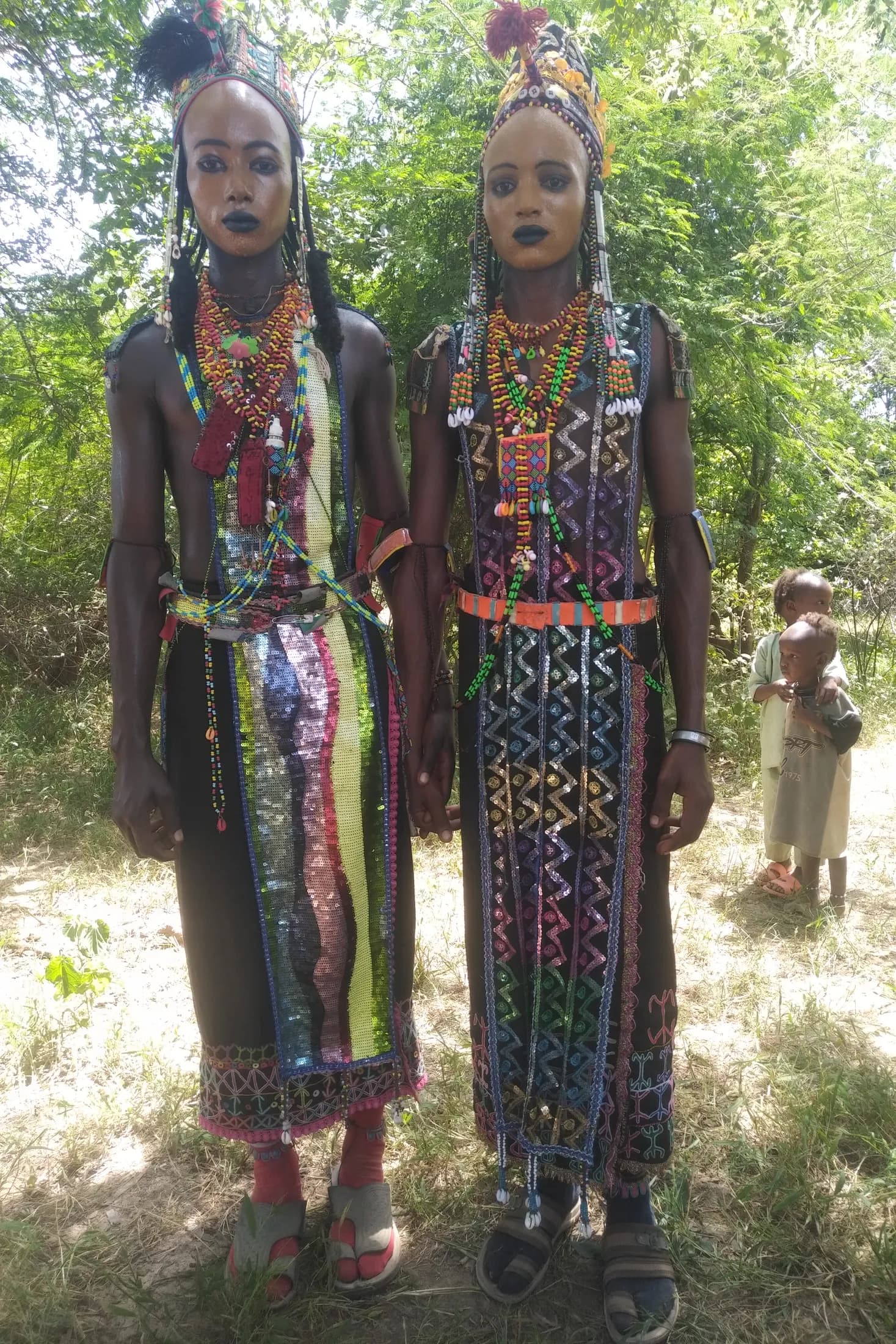
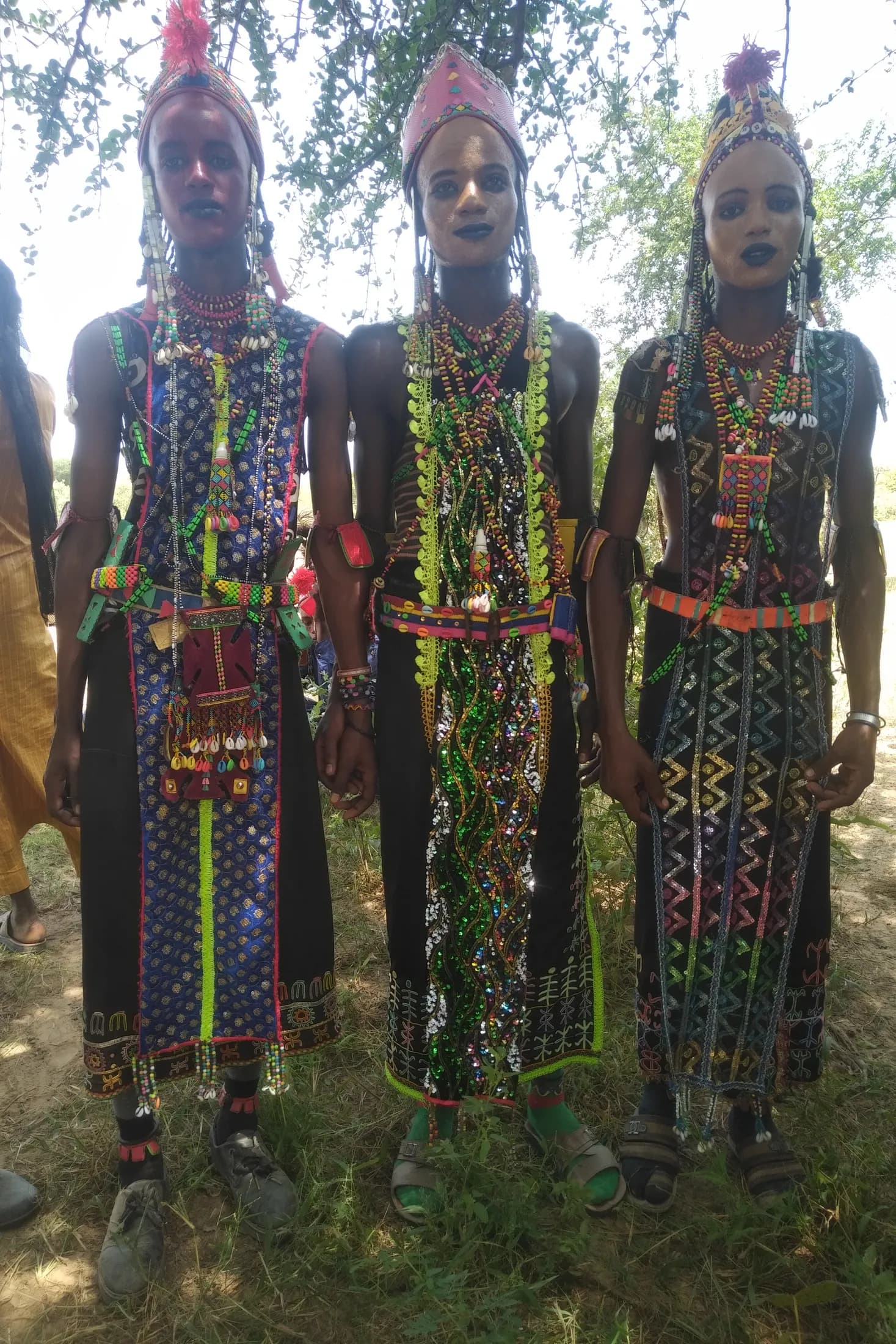
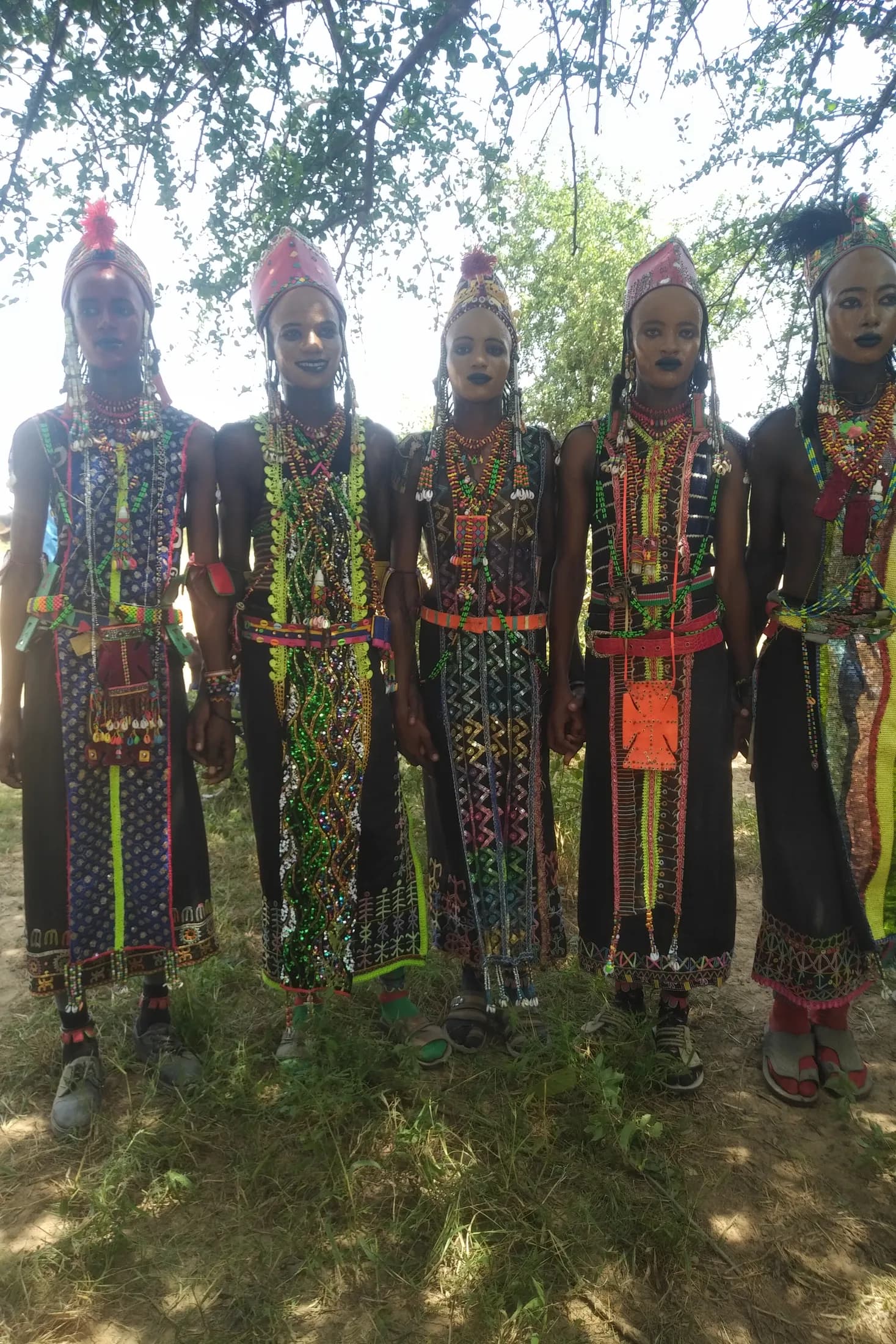
Landscapes, yes. People, only with their consent — and consent is asked for, not assumed. Our guide acts as intermediary where needed. At the Gerewol this matters especially: we are received as guests, not spectators at a show.
Avoid photographing official buildings, military personnel and checkpoints: it is forbidden and can go badly.
On rock paintings: no flash, ever. And above all, **never wet a wall** to revive the colours. The practice, still common, dissolves the binders and destroys in seconds what seven thousand years had left intact.
Yellow fever vaccination is mandatory and checked on entry. Antimalarial treatment is recommended for the south of the country and the lake region; the northern desert carries very low risk. Also check your routine vaccinations are up to date — diphtheria-tetanus-polio, hepatitis A and B, typhoid.
A first-aid kit accompanies every trip, but bring your own medication in sufficient quantity, in its original packaging, split between several bags.
Insurance covering assistance and **medical repatriation** is mandatory to travel with us. This is not a formality: from the Ennedi, an evacuation is counted in days, not hours.
This information is indicative — consult a doctor or travel health centre before departure.
A soft bag rather than a hard case: the 4×4s are packed tight. Bring covering, light-coloured clothes for the day, a fleece and a sleeping bag rated to 0 °C for the nights — it is 8 °C in January in the Ennedi, and sometimes below freezing at altitude in the Tibesti.
Essentials: chèche or scarf, wide-brimmed hat, category 3 or 4 sunglasses, high-factor sunscreen, closed walking shoes, head torch, water bottle.
Useful: plastic bags to keep sand out of camera gear, wet wipes, toilet paper, and cash in small denominations. Bank cards work almost nowhere outside N'Djamena.
Between 4 and 12 depending on the itinerary, and often fewer. The Gerewol is limited to 8 participants, out of respect for the gathering. Tibesti expeditions too, for logistical reasons.
We also run private departures from two people, with itineraries adjusted to your pace and interests. Ask us for a tailored quote.
Within 48 working hours. Your enquiry receives a reference, and an adviser replies with a proposed itinerary matched to your dates, budget and interests.
Submitting an enquiry commits you to nothing: it is the start of a conversation, not a booking.
Yes, and it is a significant part of what we do. The itineraries on this site are proven routes, but they can be changed: extend the time in the Ennedi, add Zakouma, travel as a pair, fit the trip around fixed dates, orient the programme towards photography or archaeology.
Describe your project in the contact form marking it 'tailor-made', and we will build the itinerary with you.