

DesertDemanding
The Grand Loop: Ennedi and the Lakes of Ounianga
Fifteen days on the track linking Chad's two World Heritage sites, out by the northern route and back through the Ouaddaï.
- Duration
- 15 days
- Group size
- 4–12

Sahara
Eighteen lakes in the driest desert on earth
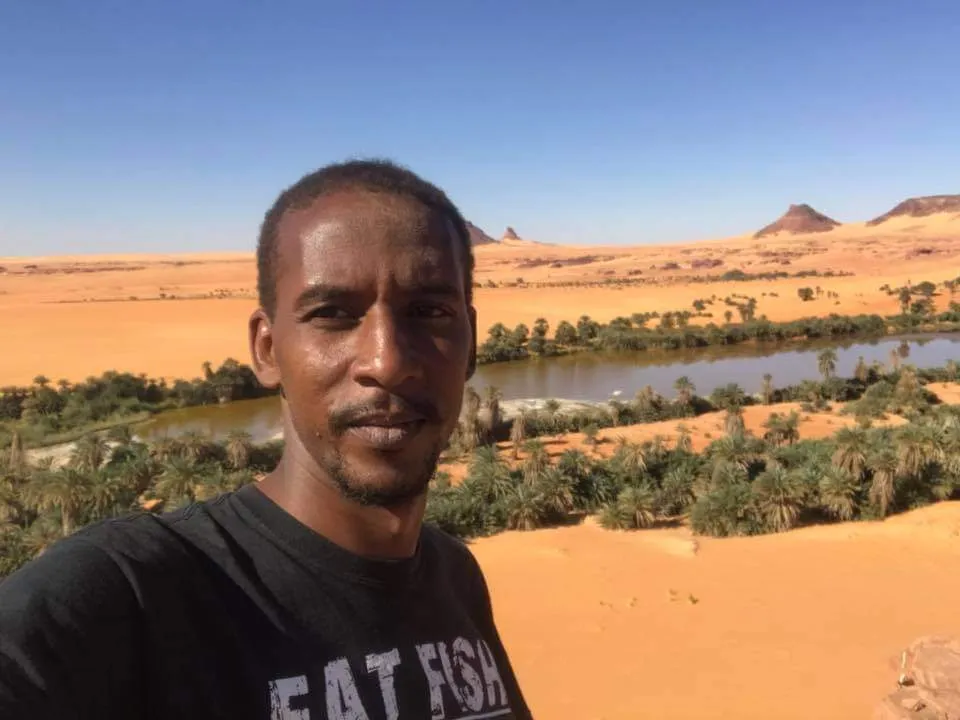
The Ounianga lakes are a group of some fifty water bodies, mostly highly saline, occupying a basin between the Tibesti massif to the west and the Ennedi to the east. They fall into two clusters: Ounianga Kébir — 'greater Ounianga' — and Ounianga Sérir, 'lesser Ounianga', 60 km to the south-east. Together they cover 20 km² and form the largest lake system in the Sahara.
The Ounianga lakes are what remains of a single vast lake that filled this basin 5,000 to 15,000 years ago, when the Sahara was a savannah crossed by rivers. When the climate turned, the great lake fragmented and evaporated — but not entirely.
What makes Ounianga exceptional is a hydrological paradox. The region receives almost no rainfall and its evaporation rate is among the highest on earth. The lakes should have vanished long ago. They survive because they are continuously fed by a fossil aquifer — rainwater from ten thousand years ago, stored in the sandstone and surfacing here.
At Ounianga Sérir a remarkable natural mechanism keeps the water fresh: reeds covering the lake surfaces slow evaporation, while salt is carried towards Lake Téli, the largest of the group, which acts as a saline outlet. Lake Katam, at Ounianga Kébir, is split in two by a tongue of sand: its western half is deep blue, the other an intense green, coloured by the alga Spirulina platensis.
The Ounianga lakes were inscribed on the UNESCO World Heritage List on 1 July 2012, at the 36th session of the Committee held in Saint Petersburg, as Chad's first natural World Heritage site.
Galerie
Our journeys
Fifteen days on the track linking Chad's two World Heritage sites, out by the northern route and back through the Ouaddaï.