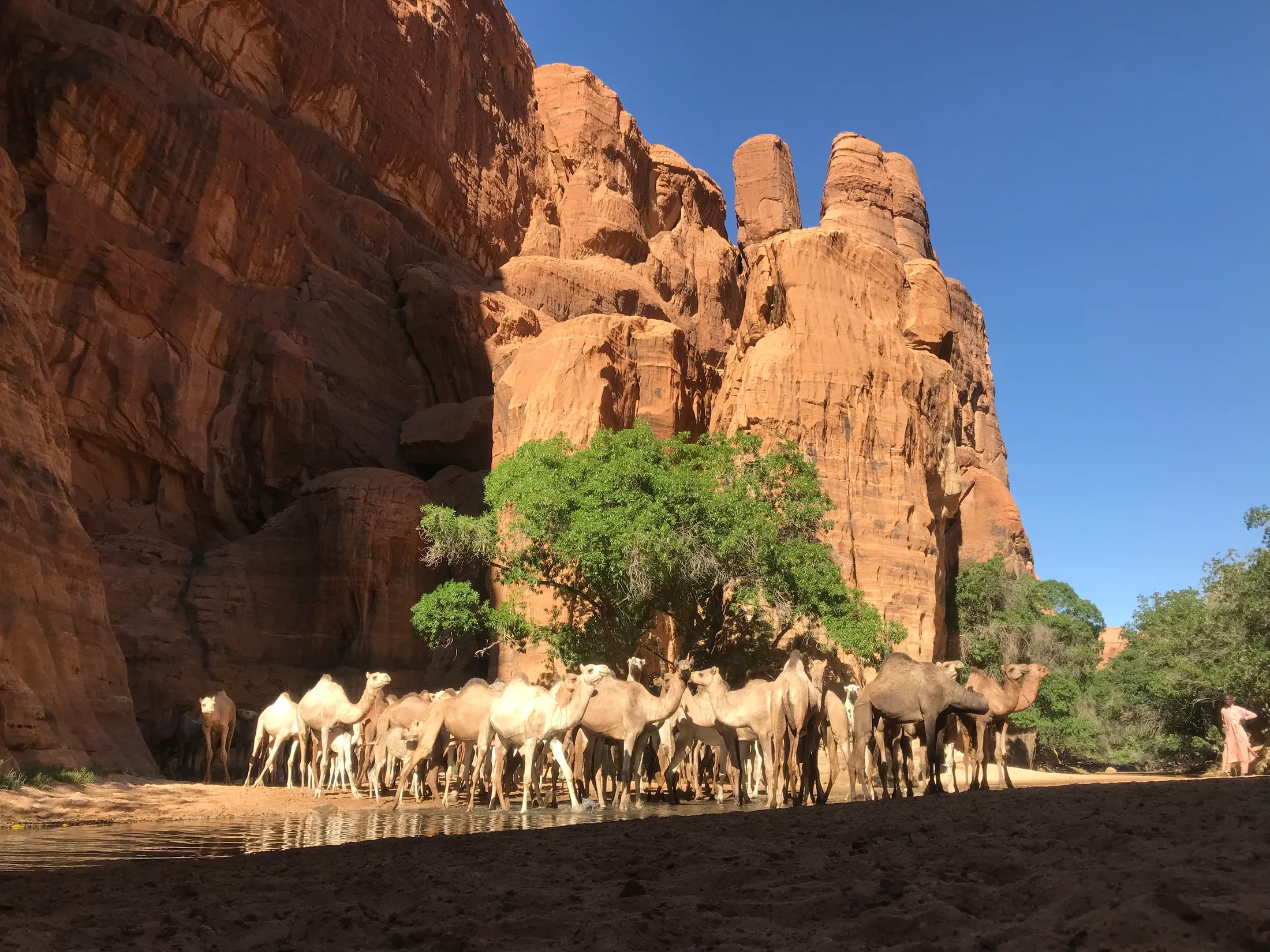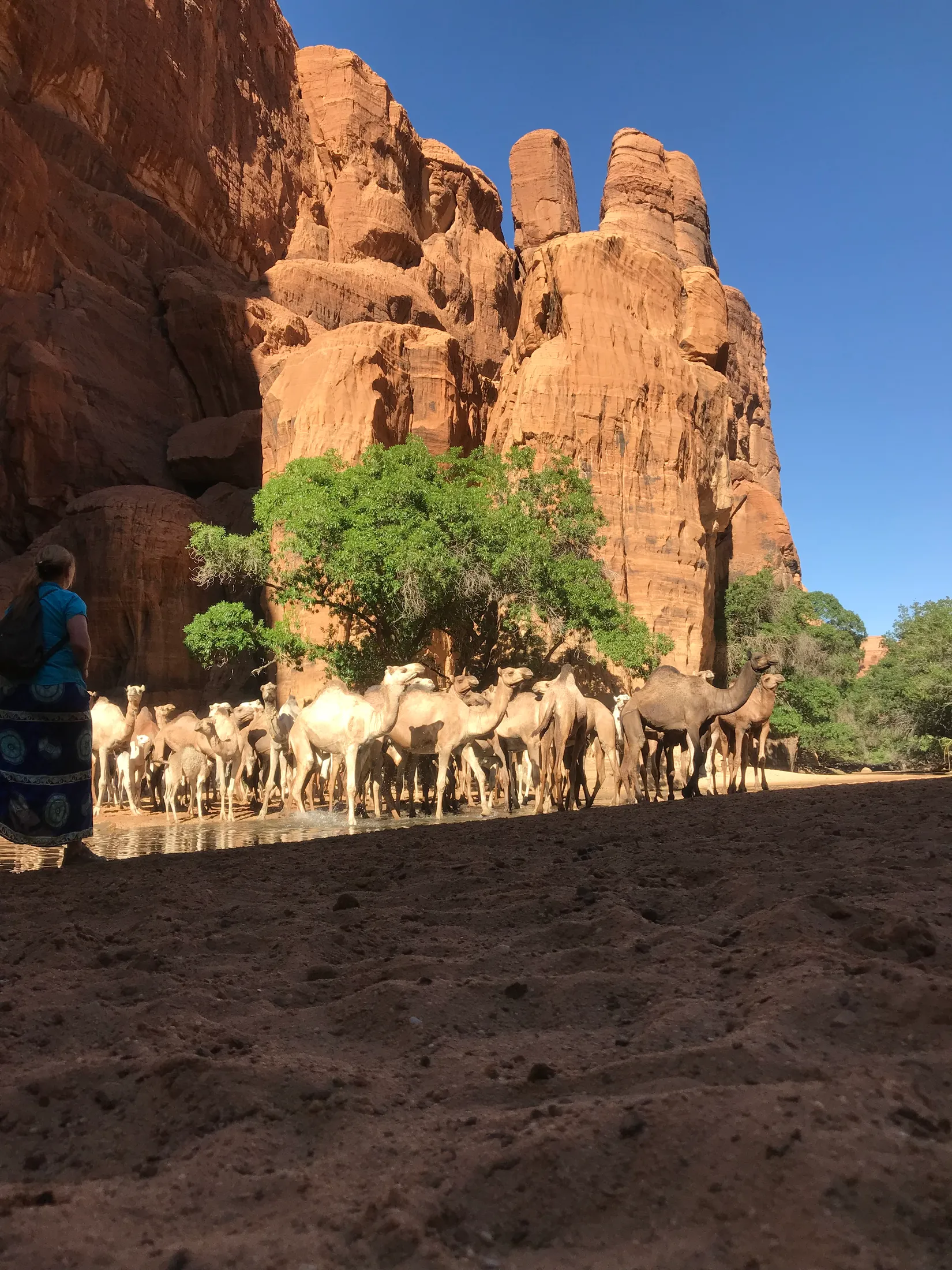

You walk half an hour up the wadi bed, between converging walls, before you understand why Archei is what it is. The canyon is a few metres wide and three hundred metres high. The sun reaches in only at noon. That geometry is what saved the water — and what lives in it.
Between 10,000 and 4,000 BCE the Sahara was a watered savannah, crossed by rivers and lakes. The Nile crocodile was everywhere in it. Then the monsoon withdrew south, the rivers dried, and the vast majority of that fauna disappeared or followed the water.
At Archei a few individuals stayed. The canyon, too deeply cut for evaporation to win, kept a permanent reserve fed by subsurface flow — water held in the wadi's alluvium. The population found itself cut off from the rest of the species, more than a thousand kilometres from the nearest river.
What you see today is the result of several millennia of isolation in a tiny space. These crocodiles are markedly smaller than their relatives — a classic response to resource constraint. They feed on fish, amphibians, and whatever the canyon gives them.
You watch them from the viewpoint above, never from the bank. The rule applies as much for them as for the herds: every day hundreds of dromedaries come down the canyon to drink, and it is that traffic which gives the water its ink-black colour. Archei is not scenery. It is the water point on which the whole massif's pastoral economy depends.